Clarington is a useful regional label, but a moving request needs the actual community, property and loading entrance. This guide helps turn Bowmanville, Courtice, Newcastle, Orono or rural addresses into a complete itinerary for household transport and additional collections.
| Move detail | Question to resolve | Preparation |
|---|---|---|
| Location | Which community and civic address are involved? | Confirm both addresses on the written offer. |
| Townhouse | Which stair turns affect furniture? | List floors and measure large pieces. |
| Rural approach | Will the proposed truck reach the building? | Show gates, surface and turning space. |
| Key release | Is delivery access confirmed or conditional? | Agree waiting and backup arrangements. |
| GTA route | What does the full travel price include? | Separate dispatch, route and approved extras. |
1. Identify the community and exact loading location
Give the full civic addresses and name the communities when you first contact a moving company. The Municipality’s maps page provides mapping resources for Bowmanville, Courtice, Newcastle and Orono. Use an exact address to clarify the destination rather than relying on an informal description such as “east of Oshawa.” Ask the provider to confirm both locations and the route on its written offer.
Record whether loading will use a private driveway, managed building area or proposed street position. Describe stairs, gates, walking distance and any separate entrance. For a rural address, add the driveway surface, turning space and overhead clearance. A mover’s general service coverage does not establish that every vehicle can reach every property. Send access photographs and let the company assess whether its proposed truck and equipment suit the site before confirming the arrangement.
2. Published company contacts serving the area
The TWO MEN AND A TRUCK Oshawa page expressly lists Clarington, Bowmanville and Courtice among its service areas. The published number is 289-275-2055. Its service categories include household and apartment moving, business moves and packing. Ask about the particular community and addresses you need, and confirm the exact tasks instead of assuming every advertised service is included in the first estimate.
Rockbrune Bros Movers publishes an Oshawa and Durham regional page describing local and longer-distance moving, packing and storage. Its GTA telephone contact is 1-800-561-4139. Ask whether it accepts your particular Clarington route and which office manages the job. These are research contacts without a quality order or availability promise. A regional provider can be relevant without having a depot in your community, provided the written travel terms are clear.
3. Plan Bowmanville and Courtice townhouse moves by floor
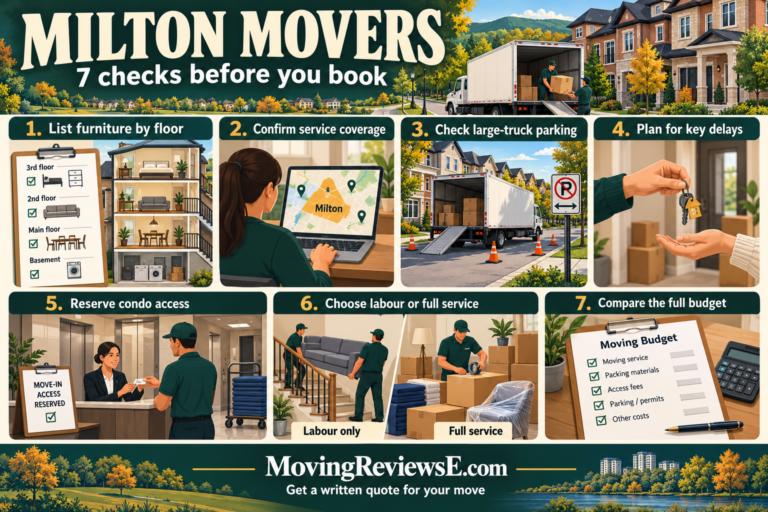
For a multi-level property, list furniture and boxes on each floor and photograph the stair turns. Identify whether the crew enters at the living level or must carry from another level first. Give dimensions for large sofas, wardrobes and desks. Ask which pieces need dismantling and whether the company supplies reassembly at delivery. A bedroom count does not show the number of stair flights or the work hidden in a basement or garage.
Check the destination route as carefully as the pickup. Furniture that leaves one home easily may not turn through the next home’s hall. If the building has a managed lane or limited visitor loading, get the owner’s instructions before promising a truck position. Let the estimator know about a possible longer carry. A clear description gives it a chance to plan the crew and vehicle rather than discovering the most difficult access point after the truck is loaded.
4. Describe Newcastle, Orono and rural access precisely
For any property with a longer approach, supply measurements and current photographs of gates, narrow sections and turning space. Explain whether goods are in the main home, a separate garage, a shed or another building. Ask the provider to include those collection points in its assessment. Do not assume that calling a job a house move includes undisclosed workshop or outdoor contents scattered across the property.
Discuss seasonal conditions for the specific address. Identify who clears snow or prepares the walking route before arrival, and ask what happens if the proposed loading position is unavailable. If the driver needs a smaller transfer vehicle, obtain the extra handling and travel terms in writing. These are possibilities to assess rather than claims about every home in these communities. Keep the office updated if the driveway, entrance or shipment changes after the initial survey.
5. Coordinate building reservations and key handovers
An apartment or condo move needs management’s actual moving rules. Ask about lift reservations, loading locations, access hours and any required documentation. Provide those instructions to the mover before accepting an arrival plan. If both ends have restricted access windows, ask the company to assess the inventory against those slots. A short drive between properties does not guarantee that loading and unloading will fit a tightly scheduled reservation.
If delivery depends on possession or key release, distinguish a confirmed time from an expected one. Ask about waiting, rescheduling and storage alternatives before the date becomes urgent. Identify who can authorize a change if keys are delayed and keep that person reachable. For truck use on public roads or a special loading arrangement, consult the Municipality through its official contact information; do not assume a building reservation also grants street-loading permission.
6. Compare a Clarington-to-GTA move on the whole route
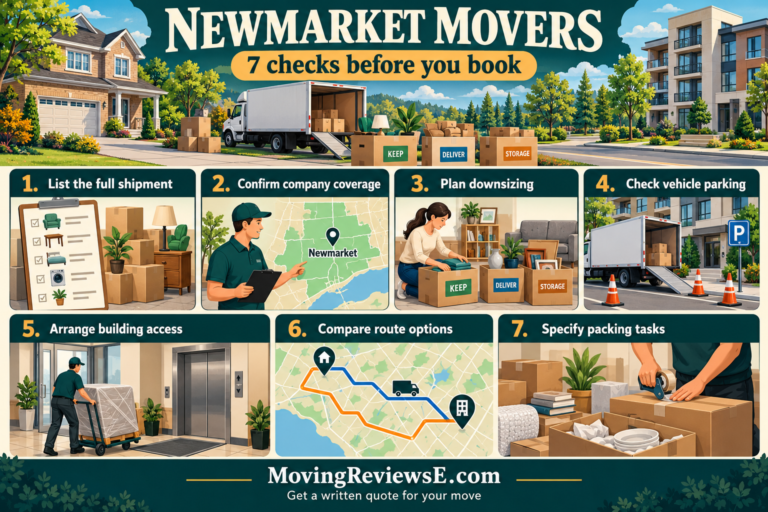
Ask where the crew starts, when billable time begins and whether return travel is part of the offer. For a route into Toronto or another GTA location, provide destination access rules as well as the address. Confirm how any toll route would be approved and billed. A passenger-car route estimate cannot establish the truck’s final arrival time after packing, loading and building procedures are added.
Check whether the provider expects one vehicle load or more and whether the shipment has a dedicated delivery plan. For longer-distance service, clarify the delivery date or window and any intermediate handling. If storage is possible, request collection, storage and redelivery figures separately. Use the quote comparison tool only after you understand the basis of each offer. Entering a transport-only price beside a full-service total does not create a meaningful comparison.
7. Make small deliveries and extra stops explicit
For a furniture pickup, give the item dimensions, seller’s collection window, stairs and required preparation. Ask whether wrapping, dismantling and placement are included. Confirm the seller’s availability yourself and decide who communicates if the time changes. If the item is a piano or another heavy specialty piece, request an assessment of that particular task rather than treating the small number of items as evidence that ordinary handling is sufficient.
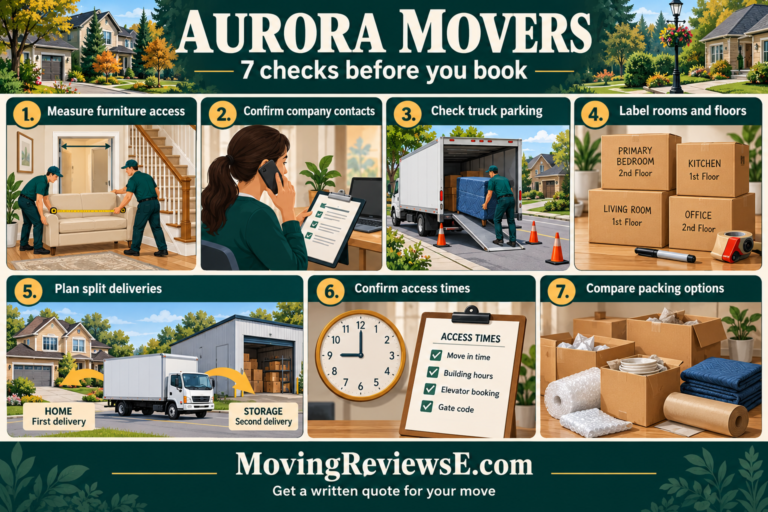
For a split household shipment, identify exactly what goes to storage or another address. A second stop needs its own access information and affects the loading order. Label each destination distinctly and ask the mover to confirm the route and price before the day. The small-move tool and inventory builder can help organize these details, but their planning results do not reserve transport or confirm that a company accepts the job.
Use Clarington’s maps to resolve location and enquiry details
Clarington’s public map page supports property searches and links community street maps for Bowmanville, Courtice, Newcastle and Orono. It also lists a road-ownership map. These sources help identify the site and appropriate authority for an access question; they do not assess the assigned truck or grant loading permission.
Supply the civic address, unit and actual loading entrance to the company. If a separate building is involved, mark its position. A provider serving the area from an Oshawa branch needs the complete route rather than a request using only the Clarington name.
For a public-space enquiry, identify the proposed position and authority responsible for the road. Ask which arrangement applies to the actual vehicle and equipment. A general municipal contact can route that question, but the moving request should ultimately include the answer relevant to the site.
For private access, provide current photos and dimensions and let the provider assess the approach. Property boundaries, aerial images and map distances do not show every gate, low clearance or turning limitation. Distinguish map-based location information from a real vehicle assessment.
An illustrative Clarington itinerary with a family collection
Imagine a household leaving a Courtice property, collecting an accepted furniture group from a relative near Newcastle and delivering to a Bowmanville home. This planning example has two origins. List the relative’s goods separately so the company knows they are not already present at the main home.
Confirm the relative’s release appointment and preparation responsibilities. Supply dimensions for the larger pieces and photos of their route out. A family relationship does not remove the need for someone to open the property and identify which goods should leave.
Ask the provider to choose the order after assessing both origins and the receiving home. The extra collection may affect how the truck is packed as well as the road journey. Do not add it after booking as a casual stop without asking for an updated accepted scope.
At Bowmanville, confirm key access and the final rooms. If some furniture is intended for another recipient or storage, decide that before loading. An uncertain destination cannot provide the company with a workable unloading appointment or help it select an efficient stop sequence.
Record dispatch travel separately from travel among the three properties as the provider explains it. Keep its calculation intact when comparing another offer; avoid adding an assumed extra route charge to a total that already includes those legs.
Use the inventory builder for the two origin groups and the request builder for the itinerary. A useful Clarington offer names actual communities, accepted pickup points and final placement. Municipal maps support accurate location and enquiry routing while the provider remains responsible for assessing its vehicle and handling plan.
Clarington moving questions
Should I search by municipality or community?
Use both when describing your move: the exact community helps identify the location, while the full civic address lets the provider assess its route. A company publishing Clarington coverage should still confirm your particular property and task. Do not infer a nearby dispatch base from a broad service-area page.
Does a short move need a detailed inventory?
Yes. Stairs, bulky furniture, packing and the loading position remain important even when the two homes are close. A brief but accurate list gives the mover a basis for crew and vehicle planning. Add pictures of difficult pieces and the route they must follow.
What should I finalize the day before?
Confirm the appointment, addresses, access instructions and designated contacts. Complete the preparation you agreed to handle, label destination rooms and separate essentials travelling with you. Keep the accepted quote and inventory accessible. The moving checklist provides a useful task record alongside the actual booking documents.
Research checked: October 27, 2026. Based on linked official company and municipal pages. We have not hired or independently tested these providers. Published coverage and contacts can change; confirm them before booking. This guide gives planning questions, not a live price or an exhaustive provider list.