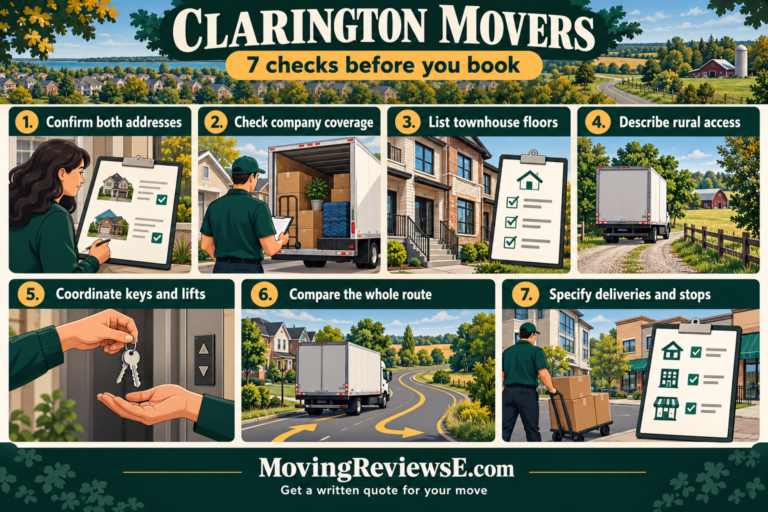
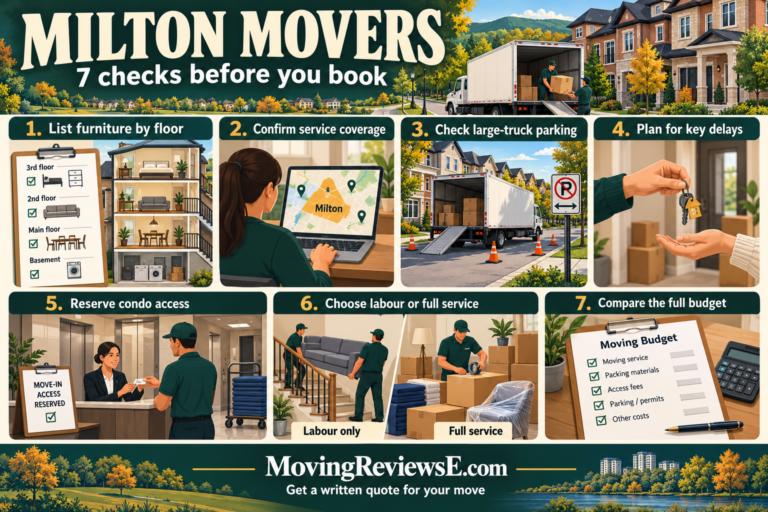
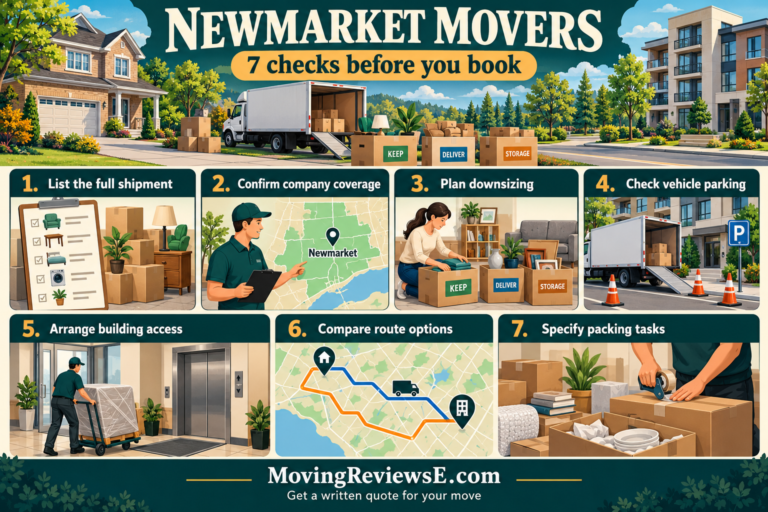
A Caledon property move can include several loading buildings and an approach that needs assessment for the actual truck. This guide helps identify the full address, record outbuilding goods and distinguish ordinary loading from parking or waiting on the road.
| Move detail | Question to resolve | Preparation |
|---|---|---|
| Driveway | Can the proposed vehicle enter and turn? | Send surface, slope, clearance and gate details. |
| Outbuildings | What is collected outside the main home? | Survey garages, sheds and workshops separately. |
| Weather | Who prepares the driveway and walking route? | Agree access responsibilities before arrival. |
| Alternative loading | Is a transfer vehicle or longer carry needed? | Obtain revised handling and pricing terms. |
| Storage | How are collection and redelivery scheduled? | Record both stages and notice requirements. |
1. Give the full address and describe the approach
Use the complete civic address and identify the community when contacting a mover. “Caledon” alone does not tell the estimator how the vehicle reaches the building or where loading will happen. Describe driveway length, surface, slope and available turning space. Include gates, overhead branches, tight entrances and any features that could limit access. Supply recent photos taken along the approach, not only a front-door picture that hides the route from the road.
Ask the moving company whether its proposed vehicle suits the property. If it needs a smaller truck, transfer vehicle or longer carrying route, request the handling and pricing terms in writing. Do not promise that a heavy vehicle can use a private driveway because cars have used it. The provider and driver need enough information to assess their equipment against the actual site, especially when the destination has conditions different from those at pickup.
2. A branch that explicitly publishes Caledon coverage
The TWO MEN AND A TRUCK Brampton page lists Caledon among its service areas. Its published contact number is 289-201-2452. The branch describes home moving, business moving, packing and storage. Ask it to confirm your precise addresses, service requirements and date range. Published area coverage establishes a reason to enquire; it does not establish suitability for every property or current crew availability.
Clarify where the vehicle dispatches from and how travel is charged. A branch outside Caledon can still serve a Caledon address, but the complete route belongs in the quotation. This contact is an unranked research starting point, not an assertion that only one company operates locally. Compare written scope and responsibility with other providers you consider rather than choosing solely by whether a website uses a town name in its heading.
3. Include outbuildings and outdoor contents in the survey
Walk through the garage, shed, workshop and any separate storage area when preparing your inventory. A company assessing only the main house can miss a substantial amount of work. Identify which buildings contain goods, the distance to the loading point and whether there are steps or uneven surfaces. Ask for assessment of heavy tools, workbenches and bulky outdoor items rather than assuming they fit the same handling plan as packed household boxes.
Tell the provider about equipment that may contain fuel, chemicals or other restricted materials and follow its written preparation instructions. Do not leave unidentified containers for the crew to decide about on arrival. Confirm any items the company will not transport and arrange suitable alternatives. Keep the final inventory split between buildings so loading can follow an agreed sequence without repeated trips to discover belongings that were omitted from the original walkthrough.
4. Check parking and road access with the right authority
The Town’s parking information explains its temporary parking options, while the parking by-law page identifies restrictions. Use those official sources to ask about the moving vehicle and proposed location. Do not assume that an ordinary temporary pass authorizes every vehicle or removes all restrictions. Explain whether the plan uses a public road, a shared lane or private loading space.
If the driver cannot safely use the expected driveway, identify an alternative in advance rather than improvising a roadside arrangement. Ask whether the road authority needs to be consulted and who will arrange any required permission. Keep sidewalks and necessary access routes clear. The moving quote should record the location assumed for loading; if that changes, discuss its effect on carrying time, equipment and price before the crew is committed to an unsuitable plan.
5. Prepare for weather at your specific property
For a winter or wet-weather move, discuss the driveway and walking route with the provider. Identify who is responsible for clearing snow, treating slippery areas and maintaining access before arrival. If a property has soft ground or a steep approach, ask what conditions could cause the company to change the plan. These are property-specific assessment questions, not a claim that every rural Caledon move has difficult access.
Keep a way to communicate on moving day if mobile reception is unreliable at either address. Give the office clear arrival directions and identify the person authorized to meet the crew. Make sure address signs and gates can be found and opened. If the route or entrance changes after an estimate, send updated photographs promptly. A survey from another season may not describe the condition the driver encounters on the booked date.
6. Compare local, longer-distance and storage arrangements
For a move within the area, ask about dispatch travel, minimum working time and the number of trips assumed. A short straight-line distance does not describe a route involving long driveways, outbuildings and several loading stages. For a longer move, request the delivery arrangement and clarify whether it uses a dedicated vehicle, a delivery window or another service model. Keep the pricing method and included tasks visible when comparing offers.
If the new property will not be ready, ask for a storage alternative that includes collection and redelivery. Record the minimum storage term, access process, handling stages and notice needed for delivery. If you are splitting the shipment between a new home and storage, give the provider the inventory for each destination. The budget calculator can organize the figures you receive, but it does not estimate a rural-access surcharge or generate a quote on a company’s behalf.
7. Create a loading plan for a larger household
Label by destination room and mark items that are staying at the property. For goods in several buildings, use location headings in your inventory so the crew can check each area systematically. Identify furniture needing dismantling, delicate items needing packing and heavy pieces requiring separate assessment. Ask whether the proposed truck has enough capacity for the agreed shipment in one load and what happens if the list changes materially.
At delivery, use room signs and a basic furniture layout. Decide where bulky cabinets and beds belong before they are carried inside. Keep hardware grouped and labelled, and clarify which assembly tasks the provider has agreed to perform. Use the inventory builder to preserve one version of the plan for every quote request. Update it when you remove workshop contents or add storage goods instead of relying on scattered messages that can be overlooked.
Read Caledon’s loading and stopping distinctions at the actual site
Caledon’s parking rules distinguishes brief active unloading in a no-parking area from a no-stopping restriction, and lists other limitations. Those distinctions are not blanket permission for an extended household operation. Ask Regulatory Services about the proposed use when the vehicle cannot work entirely within an accepted private area.
Describe whether the truck will load continuously, wait for access or remain while goods are collected from several buildings. Those activities may create different practical questions. A road position that appears convenient on a map is not evidence that a large vehicle can stand there for the whole appointment.
For the private approach, send photos of the gate, narrowest section, turns and intended loading buildings. Obtain a provider assessment instead of guessing whether its vehicle can use a surface or cross a particular structure. If access requires a smaller vehicle or longer carrying route, have that method included in the scope.
Identify the correct road authority where uncertain. A Caledon address can involve a road managed by another authority; a Town parking answer may not resolve every route or occupancy question. Ask the relevant contact about the specific position rather than transferring a general residential assumption to a different road.
An illustrative Caledon collection from a house and detached shed
Consider a household relocating its home contents and selected belongings from a shed. This planning example begins by deciding what the carrier will accept from the shed. Photograph and list the actual goods, separating boxed household items from equipment needing individual preparation or approval.
Do not describe the outbuilding only by its size. An almost empty large shed may involve little inventory, while a small crowded one can contain many separate items and difficult access. Give the estimator the goods, starting positions and route to the truck.
Ask which items must be emptied, cleaned, dismantled or otherwise prepared under the provider’s requirements. Keep excluded or unaccepted goods out of the loading group. If another service will collect them, arrange that independently rather than expecting a household crew to accept an unidentified remainder.
Choose who opens gates and buildings and who confirms the approach is available on the moving date. If weather or site work changes it, send an update before arrival. The provider should reassess the changed condition instead of being held to a vehicle plan based on different access.
Use the request builder to attach the accepted outbuilding list to the main household inventory. The useful Caledon quote describes all collection points and the actual handling method. It does not treat rural access as an automatic surcharge or assume that being able to reach a home in a car establishes a truck’s loading position.
Caledon moving questions
Does an acreage automatically require a specialty mover?
The property description alone does not answer that. A routine household shipment may be accessible by an ordinary moving truck, while a particular gate, slope or heavy item may require another plan. Provide measurements and photographs and ask the provider to assess the actual job rather than choosing by a broad property label.
Will the crew clear the driveway?
Do not assume that snow clearing, de-icing or ground preparation is included in a moving service. Agree on responsibilities before the appointment. Ask what conditions the mover needs for loading to proceed and what its rescheduling terms are if the expected access is unavailable.
Can the company collect from a shed as well as the house?
Describe the contents, distance and carrying route during the quote request. Ask whether that work is included and whether any goods are restricted. A final building-by-building checklist helps ensure the crew collects the agreed items without treating undisclosed storage as a last-minute addition.
Research checked: October 27, 2026. Based on linked official company and municipal pages. We have not hired or independently tested these providers. Published coverage and contacts can change; confirm them before booking. This guide gives planning questions, not a live price or an exhaustive provider list.